
Freeder
Freeder LabsSocial
3.4160.00 Reviews
- Version
- 2.0.2
- Installs
- 500.00K
- Age Rating
- Teen
Screenshots

Our Review of Freeder
 Analysis by Appyee
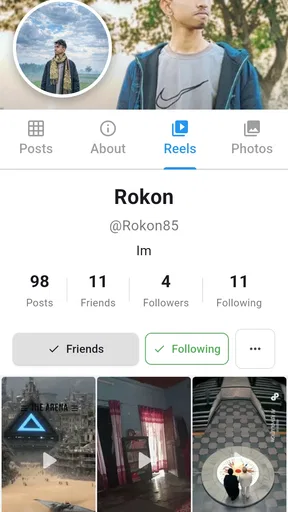
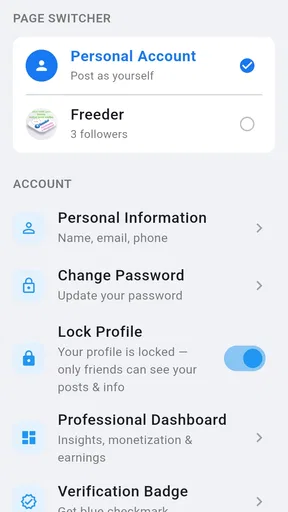
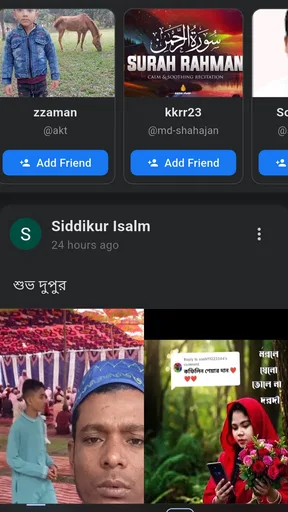
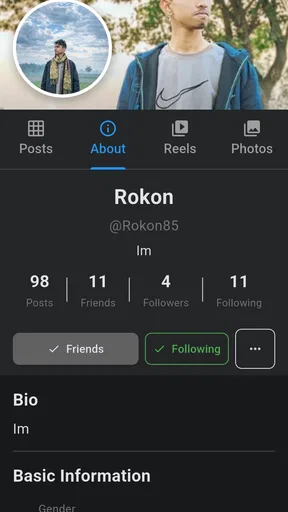
Freeder is a free social app from Freeder Labs that focuses on a simple promise: connect with people, share posts, and take part in a community. After spending time with it, I see its main appeal in the way it keeps social activity centered on participation rather than turning the experience into a complicated collection of tools. You open it to see what people are sharing, add your own thoughts, and interact with posts that feel relevant to you.
That simplicity is both its strongest quality and its biggest limitation. If you want a straightforward place to follow conversations and publish updates, Freeder is easy to understand. If you expect the depth, polish, and huge social reach of the most established networks, you may find the experience less satisfying. My overall impression is that it is best approached as a community app for people willing to explore and contribute, not as a guaranteed replacement for every social platform already on their phone.
Why Freeder’s community focus matters
I’ll look at what Freeder’s community-first approach means in practice: it changes the experience from simply checking updates to deciding when a post is worth joining. That distinction is useful when choosing a social app, because a feed can be easy to browse yet still feel empty if nobody takes part.
A social feed built around participation
The central capability here is the ability to connect, share posts, and interact with other people in one place. That may sound familiar, but the practical effect depends on how you use it. Freeder makes the post itself the starting point: you can browse what others have written, decide where you have something useful to add, and return later to see how conversations develop.
I found this more comfortable than apps that constantly push several separate activities at once. There is less mental switching between private messages, short videos, live content, shopping areas, and unrelated recommendations. The benefit is not that Freeder reinvents social networking; it is that the basic action of joining a conversation stays easy to identify.
For me, the most useful way to think about Freeder is as a place for lightweight community participation. A post can be a quick update, an opinion, a question, or a starting point for discussion. The app becomes more valuable when I treat it as a shared noticeboard rather than a personal broadcast channel. That distinction matters because a social platform feels empty when everyone only publishes and nobody responds.
The real strength is the low barrier between reading and joining in. I do not need a complicated routine to make use of it. I can browse for a few minutes, react to something that catches my attention, and write a response when I have a genuine contribution. That makes it suitable for short visits, especially when I want a social break without committing to a long session.
What the basic experience feels like
Freeder’s store summary describes a social community, and that description matches the way I approached it. It is not presented as a specialist tool for professional networking, private team communication, or content production. Its role is broader and more casual: bring people together around shared posts and everyday interaction.
The app is marked for Teen users, which gives it a general-audience social character rather than positioning it as an adult-only network. I would still recommend that younger users apply the same judgment they would use anywhere online. A community app can be friendly and useful while still requiring care about what you share, how you respond, and which conversations deserve your attention.
Freeder is available at no cost, so trying it does not require a subscription decision before you understand whether its community suits you. That is important for an app whose value depends heavily on the people you encounter. In a social product, features alone cannot guarantee a good experience; the quality and activity of the community make a noticeable difference.
Using posts as a personal filter
One practical habit improved my experience: I stopped treating every post as something that needed a reaction. Instead, I used the feed to identify a few conversations worth following and ignored the rest. This sounds obvious, but it changes the app from an endless stream into a more manageable social space.
I also found it useful to write posts with a clear purpose. A short question invites a different kind of response from a personal update, while a strong opinion works better when it gives people something specific to discuss. On a smaller or less familiar community, clarity helps your post find the right readers instead of disappearing among vague statements.
That is one of the less obvious trade-offs of Freeder’s straightforward design: the app may give you the room to participate, but you still have to create the structure yourself. The more deliberate I was about what I posted and why, the more rewarding the interactions became. Users who expect the app to automatically deliver a perfectly tailored social experience may need more patience.
A realistic everyday use case
Imagine checking Freeder during a lunch break after seeing a post about a local interest, hobby, or everyday problem that you understand. Rather than opening several apps to search for advice, publish a question, and monitor replies, you can use the same social space to read the original discussion and add your own experience. Later, you can return to see whether other people responded or expanded the topic.
That workflow is modest, but it shows where the app can fit naturally. Freeder works well when your goal is not simply to consume content but to exchange useful observations with people who may share your interests. The conversation does not have to be dramatic or highly polished. A practical answer, a thoughtful correction, or a personal example can be enough to make the visit worthwhile.
I would not use it as my only source for urgent information, because social posts should not automatically be treated as authoritative. For casual discussion and community exchange, however, it offers a convenient place to put a question in front of other users and learn from the replies. The important habit is to judge responses carefully instead of assuming popularity equals accuracy.
How it compares with familiar social apps
Compared with large mainstream networks, Freeder feels more focused on the basic rhythm of posting and interaction. Established alternatives usually offer larger audiences and a wider range of media formats, which can make them better when you need maximum reach, private communication, creator tools, or immediate contact with people you already know.
Freeder has a different advantage: its simpler identity can make the purpose of the app easier to understand. I am less likely to open it with a long list of unrelated objectives. That can be refreshing for someone who feels overwhelmed by platforms that combine nearly every type of online activity.
On the other hand, a broad network with many established contacts may feel more active from the first minute. Social apps are difficult to judge in isolation because two people can have completely different experiences depending on who they follow and whether their interests are represented. Freeder is therefore a better choice for exploration and community discovery than for guaranteed access to a particular friend group.
It also differs from private messaging apps. A messenger is usually the right choice when you already know exactly whom you want to contact and need a direct conversation. Freeder makes more sense when you want to encounter posts, exchange ideas with a wider group, and participate without starting every interaction one person at a time.
Small habits that make the app more useful
My first tip is to give the app a fair trial through active participation rather than passive scrolling. Read a few posts, respond where you genuinely have something to say, and publish a focused question if you want to test the community. A social network can look uninteresting when you only wait for it to entertain you.
My second tip is to separate personal updates from information you would not want widely discussed. Freeder is a community app, so I would keep sensitive details, private contact information, and anything that could identify another person out of public posts. This is not a criticism unique to Freeder; it is simply the sensible way to use an open social environment.
My third tip is to judge the quality of interaction, not just the amount of activity. A busy feed is not automatically a helpful one. I paid attention to whether replies added context, answered questions, or encouraged a respectful exchange. That gave me a better sense of whether Freeder matched my interests than simply counting how many posts appeared.
A fourth useful approach is to use short, specific posts when you are new. Instead of trying to introduce yourself with a long personal history, start with one clear topic. This reduces the effort required from other users and makes it easier to see what kind of response the community gives you. If the conversation develops naturally, you can share more over time.
The limits behind the simple design
The same simplicity that makes Freeder approachable can leave experienced social-media users wanting more. People who depend on advanced publishing options, highly specialized discovery, or a large existing audience may prefer a more established alternative. Freeder’s value is connected to its community, so the app cannot solve the cold-start problem for everyone.
There is also a personal-effort trade-off. To get meaningful interaction, I had to be selective and willing to contribute. Users who only want a polished stream of content tailored to them may find that a recommendation-heavy platform feels more immediately convenient. Freeder asks for a little more involvement because the social experience grows through participation.
Another limitation is that a general community can be less precise than a dedicated forum or specialist network. If your goal is expert advice in a narrow field, a platform built specifically around that subject may offer deeper discussions and a more concentrated audience. Freeder is more flexible, but that flexibility can mean spending extra time finding the conversations that matter to you.
I also would not choose it for every social need. For close friends, a private messenger is usually more direct. For professional contacts, a work-oriented network may be more appropriate. For polished visual publishing, a platform designed around photography or video may provide better tools. Freeder earns its place when the desired activity is open-ended community interaction.
Performance expectations and device access
The current version is 2.0.2, and the app supports devices running Android 7.0 or later. That broad compatibility makes it accessible to people who are not using the newest phone. In practical terms, this is helpful if you want to try the app on an older secondary device or keep social apps away from your primary phone.
I would still keep expectations realistic with older hardware. A compatible operating system does not guarantee that every device will feel equally quick, especially when browsing a constantly changing social feed. If an older phone already struggles with other community or media-heavy apps, the experience may feel less fluid even though the software can be installed.
Because the app is free, the main cost is your time and attention. I recommend deciding in advance what you want from it: discovering people with shared interests, contributing to discussions, or maintaining a light social routine. That small boundary helps prevent the app from becoming another feed that you open automatically without gaining anything from it.
What the public response suggests
Freeder has passed half a million installs and holds an average rating of 3.4 from about five thousand ratings. Those figures suggest that the app has attracted a meaningful audience while still producing mixed reactions. I read that as a reason to approach it with curiosity rather than assuming it will suit everyone immediately.
The review volume is around one hundred sixty, which means there is some public feedback to consider, but I would not reduce the entire experience to a single score. Social apps are especially dependent on timing, location, interests, and the people available in a user’s community. A rating can tell you that experiences vary; it cannot decide whether the conversations you want are waiting for you.
For that reason, the free access matters. You can test the app by looking for subjects you care about, making a small contribution, and seeing whether the responses feel worthwhile. If the community does not match your interests after a reasonable trial, moving to a more specialized or more established service may be the sensible choice.
Who will get the most from Freeder?
I think Freeder suits people who enjoy discovering new conversations and are comfortable contributing without expecting instant popularity. It is particularly appealing if you want a social app with a clear core activity: read posts, share your own, and interact with other members. The low financial barrier makes it easy to experiment, while the community format gives you room to shape your experience through the topics you bring into it.
It can also work for someone who feels that larger platforms have become too crowded with distractions. Freeder’s narrower purpose may help you focus on discussion instead of jumping between unrelated features. That does not make it automatically better, but it can make it calmer for users who value a more direct social routine.
I would suggest skipping it if your priority is reaching a large audience immediately, keeping all conversations private, or using sophisticated media and creator tools. A dedicated messenger, specialist forum, professional network, or mature content platform may serve those needs more effectively. Freeder is not a universal social replacement, and expecting it to be one would create unnecessary disappointment.
My final take after using it
Freeder is worth trying when your main goal is genuine community participation rather than a complete social-media toolbox. I like that its purpose is easy to grasp and that the free model lets curious users explore without a financial commitment. The app gives everyday posts and replies the central role, which can be a welcome change from more crowded social experiences.
Its weaknesses are equally clear. The quality of your experience depends on finding active, relevant conversations, and the straightforward design may not satisfy people who want advanced features or immediate access to a large network. I also had to bring my own intention to the app; passive browsing alone did not make it especially memorable.
Still, I would recommend Freeder to a friend who wants to try a newer social community, exchange ideas, and see whether a simpler posting-and-response routine fits their habits. Start with one interest, share something specific, and judge the app by the quality of the interactions you receive. If those conversations feel useful or enjoyable, Freeder has a clear place in your social rotation. If not, a larger or more specialized alternative will probably be the better home.
Verdict
Strengths of Freeder
- Clean, distraction-free interface for reading RSS feeds.
- Supports multiple feed sources in one convenient place.
- Fast loading makes checking updates quick and efficient.
- Useful offline access for reading previously synced articles.
- Open-source design can appeal to privacy-conscious users.
Limitations of Freeder
- Initial feed setup may feel technical for beginners.
- Some websites provide incomplete articles through their RSS feeds.
- Limited discovery tools compared with larger news reader apps.
- Interface may look dated compared with modern competitors.
- Sync options can depend on the selected feed service.
Similar Picks in This Category
View All
Meta Platforms, Inc.4.6

Instagram4.0

Likee-Live, Chat & Party Games
Likeme Pte. Ltd.4.4

Facebook Lite
Meta Platforms, Inc.4.5

TikTok - Videos, Shop & LIVE
TikTok Pte. Ltd.4.0

Moj: Free Short Drama & Reels
ShareChat4.1
Frequently Asked Questions
What is Freeder and what can I use it for?
Freeder is an RSS and Atom feed reader designed to collect updates from websites, blogs, news sources, and other publications in one place. Instead of visiting every site separately, you can add feed URLs and browse new articles through a unified reading interface. It is especially useful for users who prefer organized, distraction-free access to their favorite sources.
Does Freeder require an account or online service to work?
Freeder is primarily intended for reading feeds directly on your device, so it can be useful without depending on a large social platform or news recommendation service. However, the exact account, synchronization, and server requirements may depend on the version and configuration you install. Before downloading, check the app’s current store description and settings to confirm whether your preferred sync method is supported.
Can I use Freeder offline?
Freeder can generally be used to read feed content that has already been downloaded or synchronized, which makes it convenient when traveling or dealing with an unreliable connection. New articles still need an internet connection to be fetched from their sources. Offline availability may also depend on how much content the app stores locally and whether a feed provides full articles or only summaries.
How do I add websites and manage feeds in Freeder?
Feeds are normally added by entering a website or RSS/Atom feed address, after which Freeder retrieves available updates and displays them in its reading list. You can organize sources according to your preferences, mark items as read, and return to articles later. Some websites may not offer a compatible feed, while others may provide only headlines and short descriptions.
Is Freeder suitable for privacy-conscious users?
Freeder may appeal to privacy-conscious readers because an RSS reader can reduce reliance on algorithmic news feeds, advertising-heavy websites, and social media tracking. Nevertheless, privacy depends on the app version, feed providers, analytics, permissions, and any synchronization service you choose. Review the current privacy policy and requested permissions before installation, particularly if privacy is your main reason for choosing Freeder.
